Google Is Building the Ultimate Navigation App Everyone Will Use
8 min read In a significant evolution of its mapping and navigation ecosystem, Google Maps (and the related navigation technology from Google LLC) is evolving into what many believe will become the navigation app everybody uses. This article will explore how and why that’s happening, what features are driving the shift, and what it means for end-users and developers alike. November 11, 2025 10:18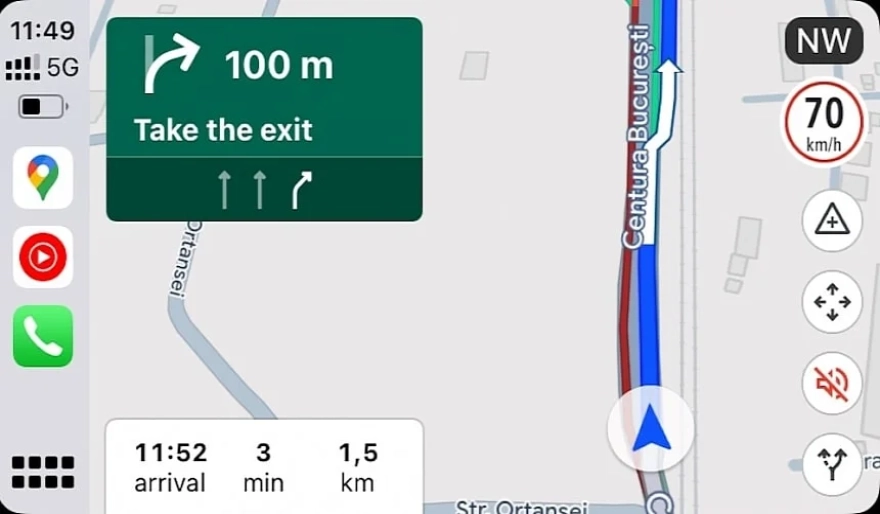
Why Google is in a prime position
There are several converging factors that put Google in the driver’s seat for navigation technology.
1. Massive scale and user base
Google Maps is already used by billions of users worldwide. That scale gives it enormous data advantages: user-contributed information, traffic patterns, real-time corrections and huge global map coverage. Having such a user base means enhancements benefit from network effects.
2. Rich map & place data
Google’s mapping infrastructure covers hundreds of millions of places, businesses and points of interest (POIs). For example, Google’s Navigation SDK uses daily updates that cover “250 million businesses and places in 250 countries.” (Google Maps Platform)
That depth of data gives the app potential to be more than just “get from A to B”.
3. Integration of advanced features & platforms
Google is not just offering turn-by-turn directions — it is integrating voice, AI assistants, accounting for vehicle integration (via Android Auto and automotive-OS platforms), and allowing navigation features to be used by third-party apps via its Navigation SDK. (Google Maps Platform)
This means navigation becomes a platform, not just an app.
4. The “everything” factor
If one app can combine driving, walking, cycling, traffic updates, POIs, voice assistance, calendar integration and more — then it becomes very hard to need a separate navigation solution. Google is moving toward that “everything” navigation experience. For instance, recent commentary notes driver-assistance via landmarks and full voice-based queries:
Key features pushing the transformation
Here are some of the features and changes that show how Google is building the “navigation app of everybody”.
Landmarks & context-based directions
Instead of just “turn left in 500 m”, the system will increasingly say “turn right after the red & white gas station” or “just past the large mall”. Using recognizable real-world features makes navigation more intuitive and less dependent on abstract distances and satellite view. (Android Central)
AI & conversational navigation
The integration of advanced AI (such as Google’s Gemini) means you can ask navigation questions in natural language, get proactive suggestions (parking, alternate routes, POIs) and potentially hands-free interaction. (AP News)
Rich developer tools & SDKs
With the launch of the Navigation SDK for Android and iOS, Google is essentially opening up its navigation infrastructure for developers to embed turn-by-turn, branded navigation into their own apps. (Google Maps Platform)
Key capabilities include:
-
Custom UI and branding while using Google’s navigation backend. (Google Maps Platform)
-
Advanced route optimisation, support for different transport modes (car, bike, walking). (google.globema.com)
-
Vehicle-optimized UIs (via Android for Cars App Library). (Google for Developers)
Real-time updates, rerouting & dynamic traffic awareness
The navigation platform is built to adjust for real-time disruptions (traffic jams, construction, accidents) and provide better route suggestions on the fly. The more users and data on the road, the more accurate and useful these updates become.
What this means for users
For everyday users (drivers, cyclists, pedestrians), the shift means:
-
More reliable and intuitive guidance: you’ll see turns in the context of landmarks rather than vague distances.
-
Better anticipation: the app can warn you of upcoming traffic events, suggest alternate routes before you’re stuck.
-
Seamless integration: whether you're driving, walking or switching vehicles, your navigation experience stays consistent.
-
Fewer separate apps: location + navigation + discovery (restaurants, shops, parking) all in one place.
What this means for developers & businesses
For app builders, logistics firms or services relying on navigation:
-
You no longer need to build your own map/turn-by-turn system from scratch — you can leverage Google’s Navigation SDK. (Google Maps Platform)
-
You can customise the experience (branding, UI) while using a robust navigation backend.
-
You gain access to a globally scaled data set of POIs, traffic, map updates.
-
For vehicle or fleet use, the navigation experience is now designed to integrate with automotive platforms (Android Auto, etc.).
Challenges & considerations
While Google has strong momentum, there are still some important caveats:
-
Privacy & data: As navigation becomes more integrated and personalized (voice, calendar, POIs), users may have concerns about how much data is gathered, stored or shared.
-
Regional differences: Map quality, traffic data, POI depth vary region to region. Some areas will have better navigation experience than others.
-
Competition & alternatives: There are other apps and SDKs (open-source or regional) that cater to niche or privacy-focused users.
-
User experience complexity: More features is good, but can raise complexity. Good design and appropriate defaults matter.
-
Monetisation / business model: For free navigation, Google will need to balance ads, data usage, and user experience.
The big takeaway
Google is positioning its navigation ecosystem to become the default for virtually everyone who uses a smartphone or connected vehicle to move around. By combining massive scale, rich map data, advanced AI, flexible developer tools and integration across transport modes and platforms, it is building what many will recognise as the navigation app everybody will use.
For users: expect simpler, smarter, integrated navigation.
For developers: it’s an opportunity to build differentiated apps on top of a strong navigation backbone rather than reinvent routing logic.
For businesses: navigation is becoming a strategic layer, not just a commodity.
Image Credit autoevolution
User Comments (0)
Popular Apps










Editor's Choice








 WP Theme
 Android
 iOS
iOS Windows
 Mac
Mac Linux
Linux Play Station
 Xbox
Xbox Steam
Steam Wordpress